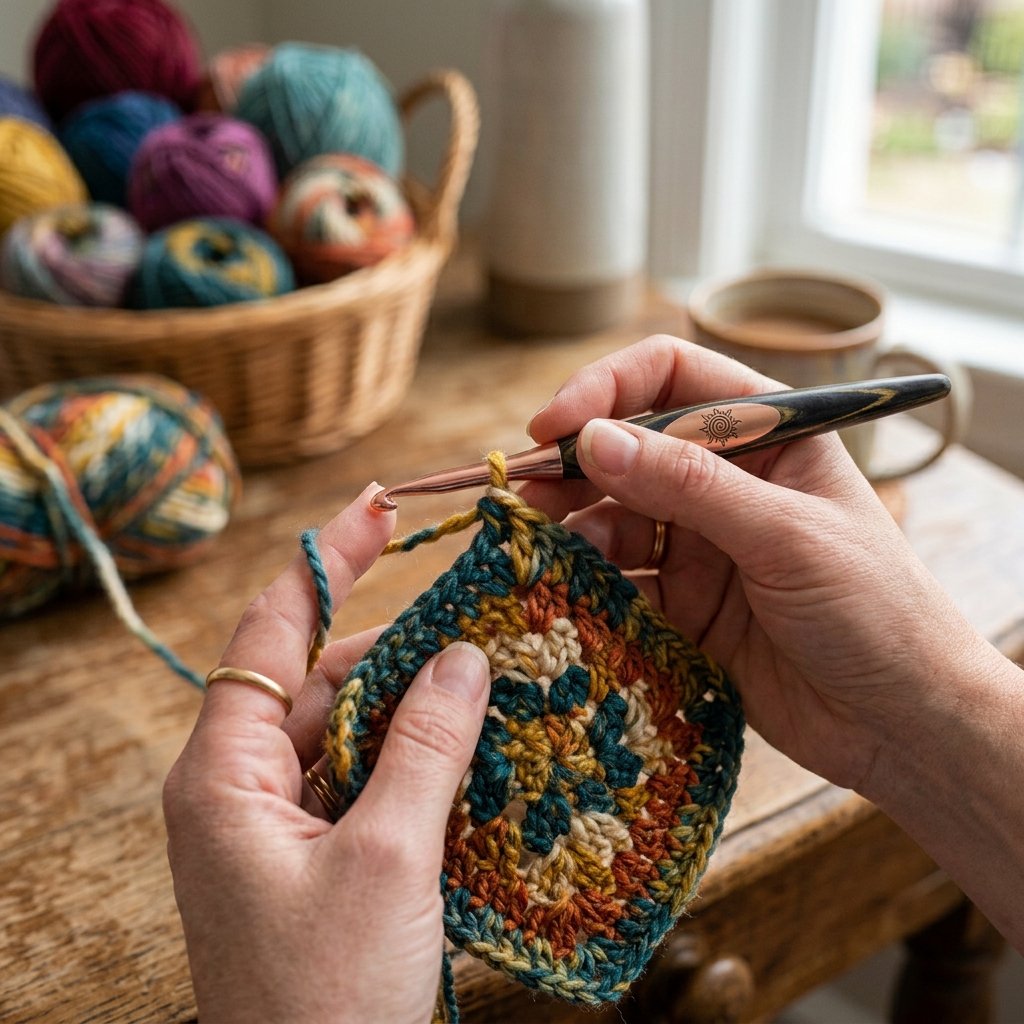
Looking for ergonomic crochet hooks for arthritis? Compare 9 popular hooks by grip, weight, and smoothness, plus tips to crochet with less hand pain.
Crochet is supposed to be relaxing. Then you hit row ten and your thumb starts to throb.
If that sounds familiar, the hook in your hand might be part of the problem. Thin, slippery metal hooks make you pinch hard to keep control, and that pinch adds up. Ergonomic crochet hooks for arthritis have thicker, softer, or shaped handles that spread the pressure across your palm instead of your fingertips.
Below are nine popular options, what we like about each, and how to pick one that suits your hands. A quick note: this is craft advice, not medical advice. If your hand pain is ongoing, check in with your doctor or an occupational therapist.
Best Ergonomic Crochet Hooks for Arthritis: Quick Comparison
- Hook Handle Good for
- Clover Amour Soft rubbery grip All-around comfort
- Tulip Etimo Cushioned grip Smooth, precise stitching
- Knit Picks Dots Light grip Lightweight feel
- Boye Ergonomic Soft, thick grip Easy, budget start
- Yarniss Thick, color-coded Trying many sizes
- Addi Swing Curved Less wrist bend
- Prym Ergonomics Plastic, shaped Inline fans
- Furls Wide, shaped Daily crocheters
- Susan Bates Silvalume Soft Softened grip Easy upgrade
9 Best Ergonomic Crochet Hooks for Arthritis
- Clover Amour Crochet Hooks
In one popular hands-on test of Amazon’s bestselling hooks, the Amour finished second out of twelve. The reviewer called it a favorite and said it never dragged on the yarn. It also has a 4.9-star average from over 9,000 reviews on Amazon. The surprise was the lab data: its roughness number looked mediocre, yet it felt smooth in use. More on that in a moment.
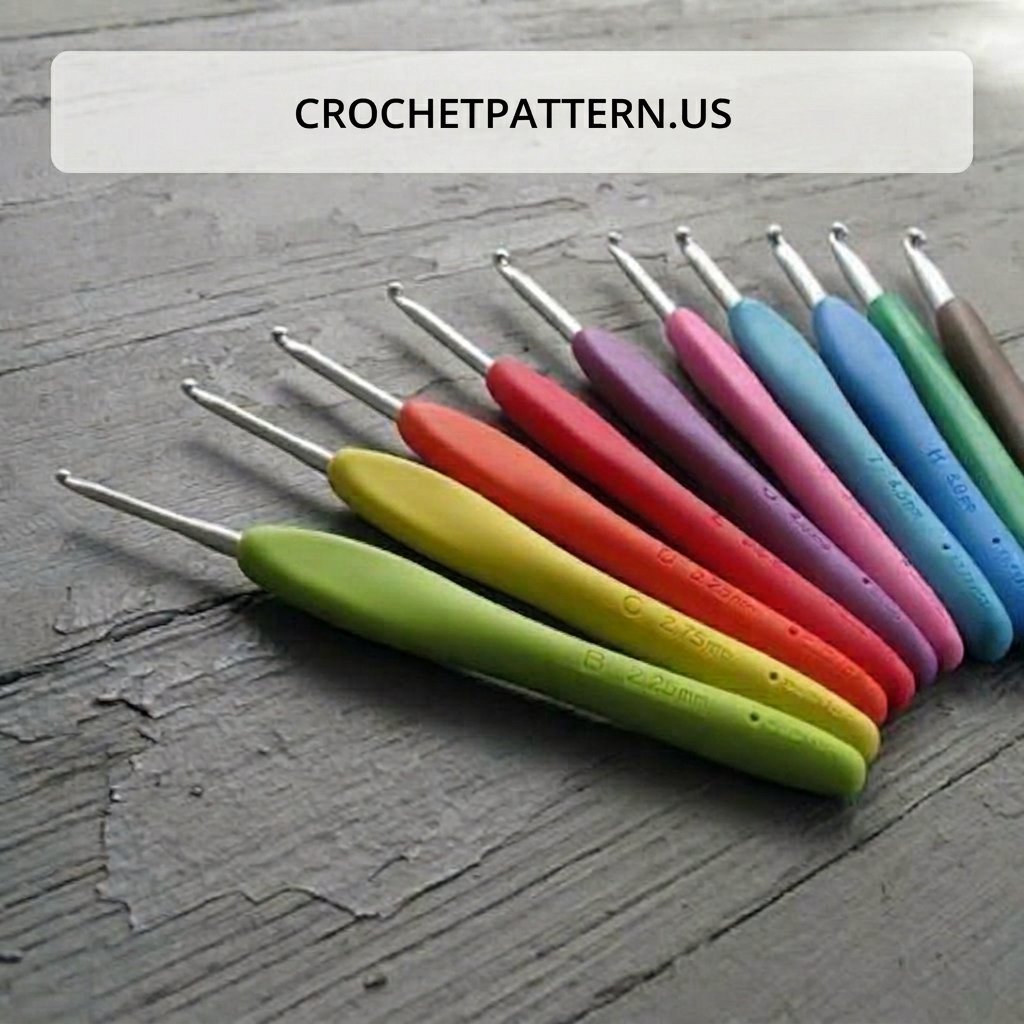
If you ask around in crochet groups, this is the hook people keep recommending. The rubbery handle is easy to hold, the neck is long, and the head is tapered.
- Tulip Etimo Crochet Hooks
Tulip hooks are known for a carefully finished head that slides through stitches. Less drag means less force from your hand, which matters when your joints are sore. The cushioned handle softens the pinch. They cost more than basic hooks, so this is one to try after you know what you like.
- Knit Picks Dots Crochet Hooks
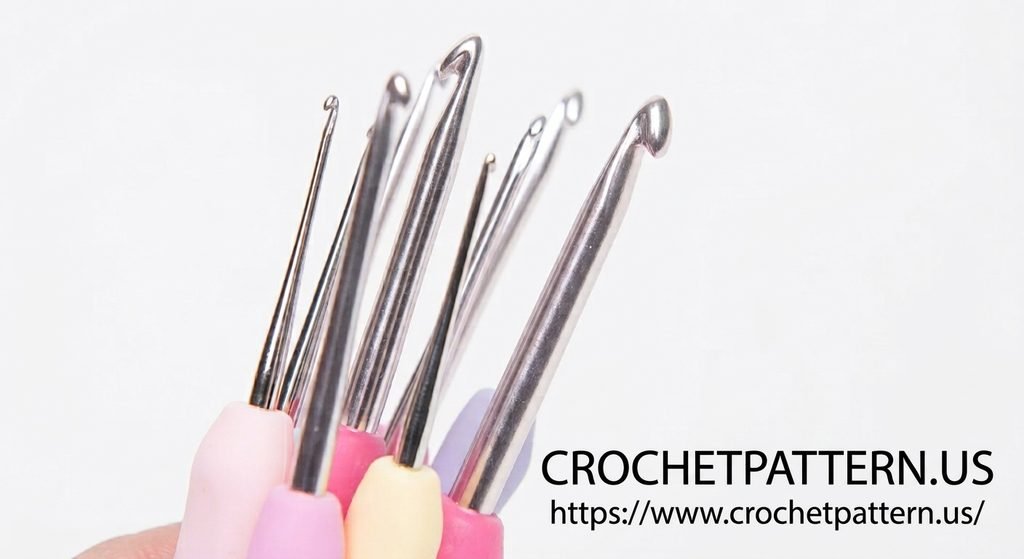
A lighter-weight pick with a gentle grip. If heavy hooks tire your hand out, a light one is worth a look. The padding is thinner than on thick-handled hooks, so check that it’s enough for you.
- Boye Ergonomic Crochet Hooks
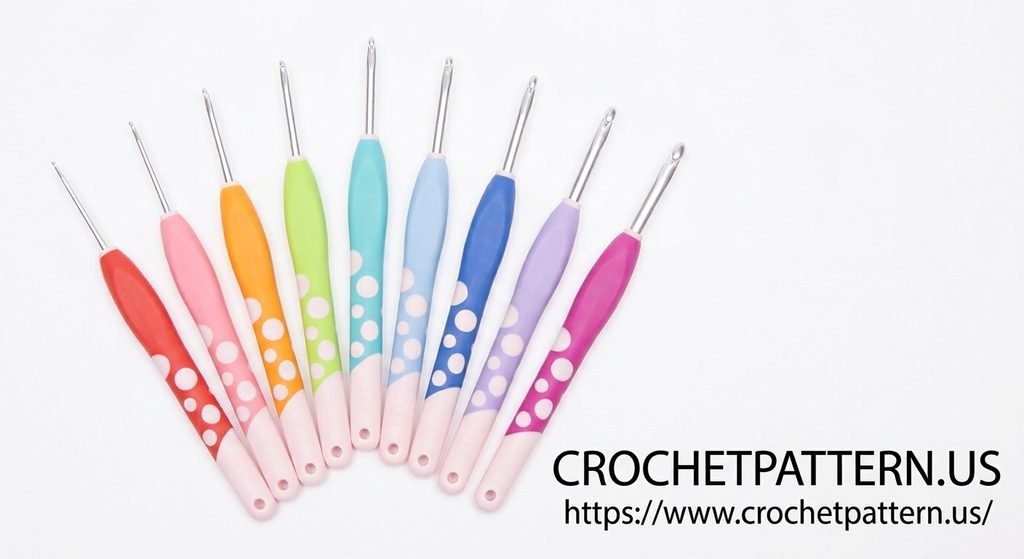
Boye hooks are easy to find and the soft, wider handle takes pressure off your fingers. It’s an inexpensive way to find out whether ergonomic handles help you at all.
- Yarniss Ergonomic Crochet Hooks
Yarniss is popular for a reason. The set of 14 comes with color-coded handles, a zippered pouch, and a $14.99 price, and it has over 26,000 reviews at 4.7 stars. The handles are comfortable and the tapered heads look great on paper.
The same reviewer noticed some drag on the yarn, though. She placed it eighth of twelve and said it felt like a hook that should be perfect and just isn’t quite smooth enough. Plenty of people love these, so treat it as a good set for trying sizes rather than a guaranteed favorite.
- Addi Swing Crochet Hook
This one looks different: the handle is curved, so your wrist stays straighter as you work. If bending your wrist is what hurts, it may be a good fit. Expect an adjustment period of a few rows.
- Prym Ergonomics Crochet Hook
A plastic hook with a shaped, rubbery handle and a sharper, inline head. The reviewer wasn’t a fan of earlier Prym hooks, but after testing a dozen others she moved it up to fifth place. It glided without scraping the yarn. If you like a pointier head, it’s worth a try.
- Furls Crochet Hooks
Furls hooks have wide, shaped handles that fill the palm. They sit at the premium end of the price range, but if you crochet most days, a better grip may be worth the money.
- Susan Bates Silvalume Soft Ergonomic Crochet Hook
A familiar hook with a softened handle. It’s a gentle step up if you’re used to plain metal hooks and don’t want to relearn your grip.
How We Evaluated Ergonomic Crochet Hooks for Arthritis
We combined three things: published hands-on testing, specs and customer reviews, and the features that matter most when your hands hurt.
We looked at:
Grip comfort: does the handle spread pressure, or do you still pinch?
Weight: lighter usually means less fatigue.
Smoothness: a hook that drags makes you grip harder.
Handle and neck proportions: a short handle with a long neck can feel awkward, and a very short neck can too.
Price and availability.
How to Choose the Best Ergonomic Crochet Hooks for Arthritis
Handle Shape, Grip, and Comfort
Thicker, softer handles generally let you relax your fingers. But shape matters as much as size. Some handles are rubbery and round, while others (like the Clover Soft Touch) are flat and made of harder plastic. The reviewer in that video usually avoided the Soft Touch because of its handle, then ended up ranking it first. She also thought it would suit both knife and pencil grips. The takeaway is simple: try different shapes before you decide.
Hook Weight and Materials
Aluminum is light and slick. Plastic is lighter still. Wood and resin feel warm but can be heavier. Small aluminum sizes can bend, so if you do amigurumi on a 2 mm hook, be gentle.
One more thing: smoothness isn’t just a number. The video’s surface-roughness tests showed that two hooks with the same roughness score (the Clover Amour and a lookalike) felt and sounded completely different on yarn. One slid, the other scraped. The score hides the shape and spacing of the tiny bumps. So don’t pick a hook off a spec sheet alone.
Inline vs. Tapered Crochet Hooks
Tapered heads have a rounded shape that slips into stitches easily. Inline heads are sharper and catch the yarn cleanly. Neither is better for arthritis; it comes down to what feels easier on your hands. If you’re not sure, start with a tapered head.
Tips for Crocheting More Comfortably With Arthritis
Take a short break every 20 to 30 minutes and stretch your fingers.
Loosen up. A white-knuckle grip on the hook and yarn adds strain.
Rest your forearms on a pillow or armrest.
Pick smooth yarn. Splitty or fuzzy yarn makes you tug harder.
Don’t trust the label alone. Several hooks are marketed as good for arthritic hands, but marketing isn’t a test. Judge by how your hands feel after an hour.
Buy a set or a couple of different hooks first. As the reviewer put it, preferences vary a lot.
Frequently Asked Questions
Are Ergonomic Crochet Hooks for Arthritis Worth Trying?
Often, yes. They won’t cure joint pain, but a comfortable handle can make longer sessions easier. They’re also fairly cheap to try.
What Type of Crochet Hook Handle Is Most Comfortable?
It depends on your hands. Soft, moderately thick, shaped handles are a common favorite, but some people love flat, hard-plastic grips instead.
Are Thick-Handle Crochet Hooks Better for Hand Comfort?
Usually, since they let you grip more loosely. But if the handle is too big, you lose control. Aim for comfortable, not huge.
Can Beginners Use Ergonomic Crochet Hooks?
Yes. In fact, starting with a comfortable hook helps you build good habits from day one.
Final Thoughts: Choosing Ergonomic Crochet Hooks for Arthritis
There’s no single best hook, only the best hook for your hands. If you’re starting out, pick up an affordable ergonomic set, try it for a few rows, and see how your hand feels afterward. Then move on to curved or premium options if you want more support.
Which hook are you using now? Tell me in the comments.
join our free community –> https://www.facebook.com/groups/1813743029589639
Check more patterns —> https://crochetpattern.us